Last updated: 18 January, 2026 @ 11:01
Walk into almost any UK fishmonger and you’ll notice something curious: monkfish tails glisten on ice – firm, sweet, and lobster-like – but whole monkfish, heads and all? Rarely.
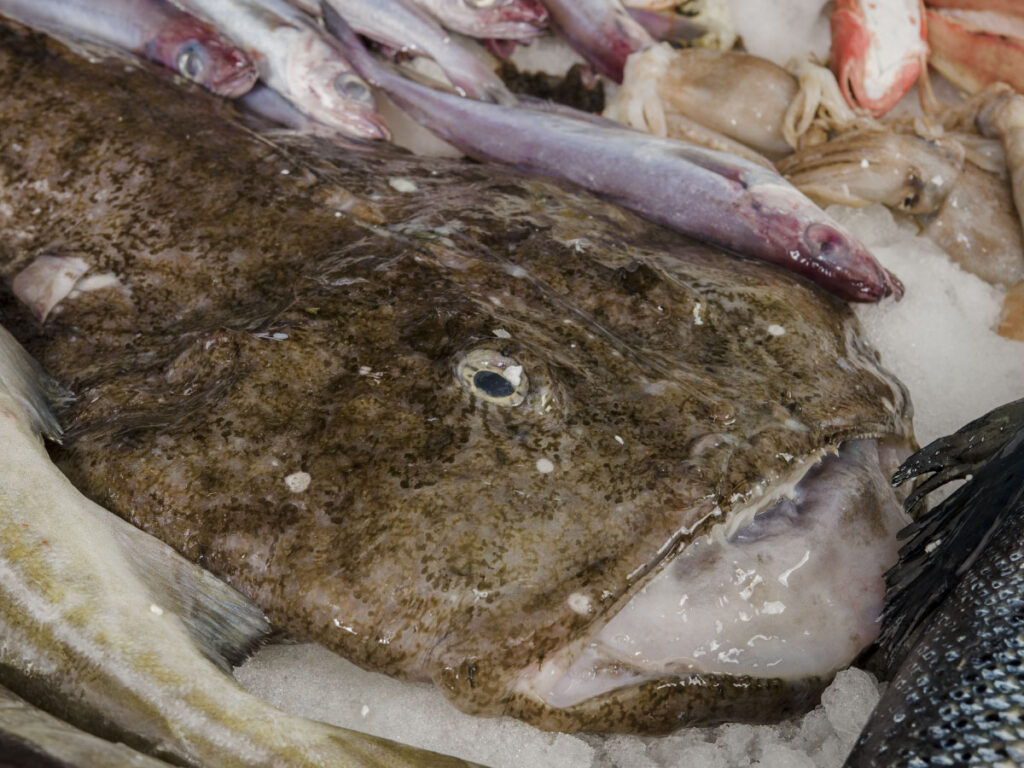
It’s not because UK fishmongers don’t value the heads – and if you’re lucky, you might just spot on the slab a whole monkfish (it’s unmistakable).
However, in general, most shoppers see only the tails. Meanwhile, across the Channel, whole monkfish are a common sight, the fish celebrated for its cheeks, tails, and stock-worthy heads.
Using the whole fish isn’t just about flavour – it’s about sustainability. Every monkfish head used is one less part of this prime fish going to waste.
Why monkfish heads are rare in the UK
The head of a monkfish is enormous – often half the fish’s total weight – and mostly bones, skin, and gristle.
UK vessels typically head and gut monkfish at sea to save storage space and ensure the tail meat remains pristine.
By reducing the volume and weight of the catch, tail meat stays fresh and can be stored efficiently until it reaches the quayside.
There’s also an old fishermen’s superstition that landing a monkfish with its head intact brings bad luck.
This belief, particularly common in regions like Cornwall, likely comes from the monkfish’s formidable appearance.
While mostly tradition today, this superstition may have historically encouraged crews to remove heads at sea.
Whole fish, full flavour
In France, and elsewhere on the continent, chefs and buyers prize whole monkfish.
The head contains cheeks, small nuggets of sweet, delicate meat considered a delicacy, and the bones make rich, gelatinous stock or bisque.
Head-on monkfish also have another benefit. If you can bare to stare at the fish’s monstrous halloween face, you’ll be able to better determine just how fresh it is – with those big, marble like eyes a key indicator.
How to use monkfish head for stock
If you get hold of a monkfish head, don’t discard it. Monkfish heads are perfect for stock, creating a deep, flavorful base for soups, sauces, and seafood risottos and paella.
Quick Tips:
- Roast the head lightly to deepen the flavor.
- Simmer gently with aromatics like onion, fennel, and a splash of white wine.
- Strain and use the gelatin-rich stock as a base for sauces or seafood dishes.
By cooking the head, you’ll get maximum flavour with minimal waste.
Sustainability and nose-to-tail eating
Using the whole fish reduces waste, respects the catch, and encourages more mindful seafood consumption.
Monkfish tails alone are delicious, but the head and cheeks are culinary treasures that can inspire home-cooks to reach for new levels and interesting dishes.
Some UK fishmongers already sell heads or can special-order them, especially for customers who appreciate nose-to-tail cooking.
Expanding this practice could make UK seafood kitchens more sustainable and flavourful, while giving shoppers access to parts of the fish often overlooked.
(If you want to learn more about nose-to-tail eating take a look at Josh Niland’s The Whole Fish Cookbook – available at Amazon)
Monkfish heads: in summary
- Monkfish heads are often removed at sea in the UK for practical reasons, including storage, quality, and tradition.
- An old superstition holds that landing a monkfish with its head intact brings bad luck, which may have historically influenced this practice.
- Monkfish heads are perfect for rich, flavourful stock.
- Using the whole fish supports sustainability, reduces waste, and celebrates the full potential of this ugly but delicious fish.
It’s time to rethink the monkfish — embrace the fish’s quite terrifying head, enjoy the cheeks, simmer a stock, and take inspiration from our French neighbours.
Delicious, sustainable, and fully respectful of the sea’s bounty.
Share this Fish Face Seafood Blog article: