
Last updated: 18 January, 2026 @ 11:01
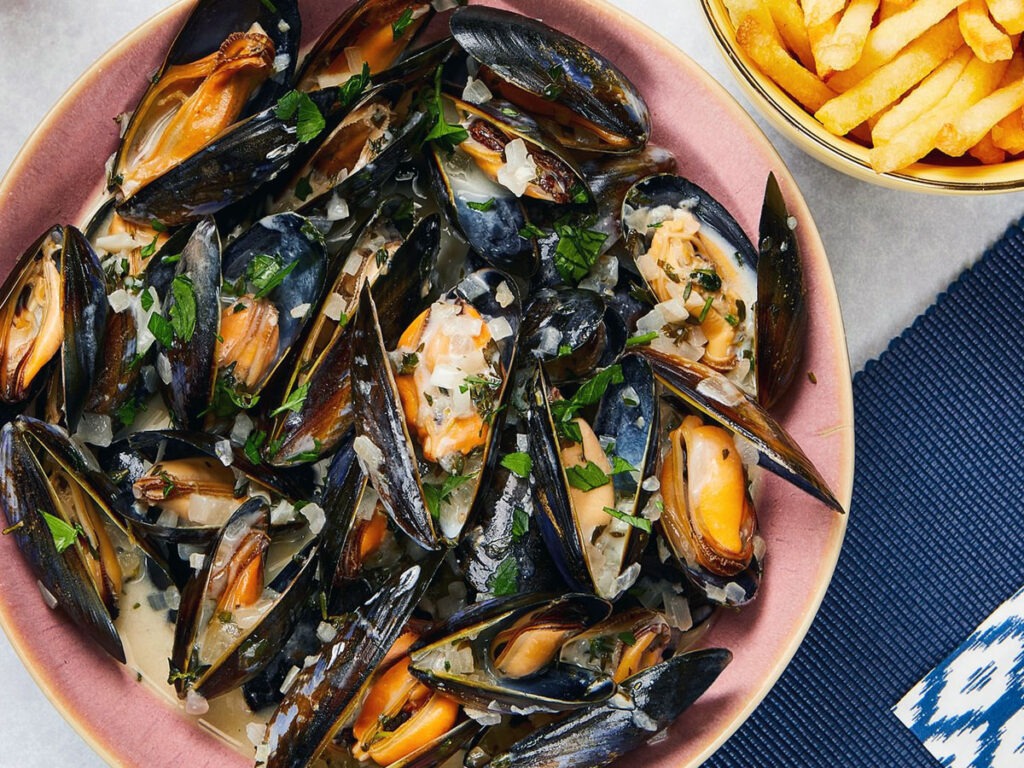
If you’ve ever tucked into a steaming bowl of mussels, you might have noticed something curious – some mussels have creamy white flesh, while others are vibrant orange. So what’s going on?
The reason that mussels don’t look the same is actually down to sex and diet. White or pale cream mussels are usually male. Orange or deeper yellow mussels are usually female.
The colour difference comes from natural pigments linked to their reproductive role.
Females often appear more vividly orange because they produce carotenoid pigments while developing eggs.
Does the different colour affect the taste of mussels?
Good news for seafood lovers – the colour of the mussel doesn’t really change the flavour.
Both male and female mussels taste much the same – sweet, briny, and tender.
The texture can sometimes feel slightly different (females with roe may be a little firmer), but most people wouldn’t notice unless told.
Colour can also play tricks on us. As the orange flesh looks more vibrant, we may expect it to taste stronger, and the brain fills in the gap.

A sign of freshness?
Colour alone isn’t an indicator of quality.
A bright orange mussel isn’t automatically ‘better’ than a paler one. Freshness depends on factors like how recently the mussel was harvested, how it’s stored, and whether the shells are tightly closed or damaged.
Season matters too – with mussels grown in the UK generally better in the colder months.
You can read more about how to store and prepare mussels in our handy guide.
Easy mussels recipes
Mussels are also super quick and easy to cook – with two classic recipes our favourite way to enjoy them.
Both the curry-spiced Mouclade and the elegantly simple Moules marinière are delicious, yet easy to make dishes.
Share this Fish Face Seafood Blog article: